

Do you also have a round, soft, button-like bulge in your abdomen? That’s a fat layer we call a stomach pooch. Most people, in their day-to-day life, get anxious about how they look in the mirror with a belly bulging out from their stomach area.
You can use these natural, practical approaches to reduce this Stomach Pooch:
- Do yoga or weight training to burn extra calories, which can reduce stomach pooch.
- Drink enough water, as it helps detox your body and remove impurities, which can reduce stomach pooch.
- Reducing a high-carb diet is necessary to reduce stomach pooch, as you can do 1000 sit-ups or crunches, but unless you manage your calorie intake, you won’t get the desired results.
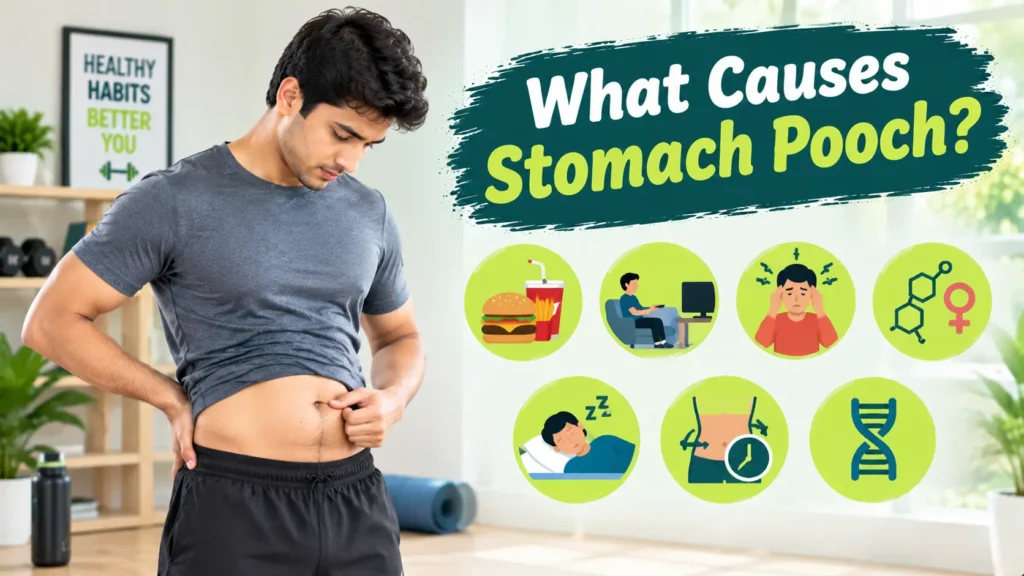
What Causes Stomach Pooch?
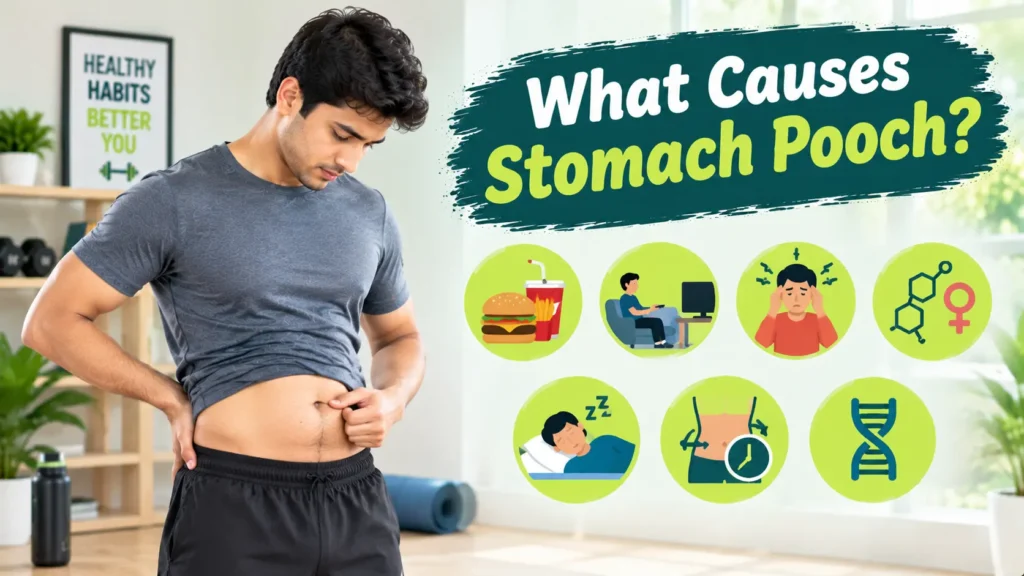
This issue has arisen due to many reasons, like eating habits and a sedentary lifestyle with no physical activity, sitting idle for long hours, poor posture, using lifts everywhere they go, and hormonal imbalance as well.
- A midline bulge in a woman’s stomach after pregnancy could cause a stomach pooch.
- Gas and bloating-related issues may result in a stomach pooch.
- Hormonal imbalances, such as estrogen or cortisol, may increase overall body fat, which can lead to a stomach pooch.
- Eating in a calorie surplus when you don’t need to can build up visceral fat around your belly, which can create a stomach pooch.
- Control your intake of sugary foods, which can increase insulin spikes and may contribute to a stomach pooch.
How to Tell Whether Your Stomach Pooch Is Fat, Bloating, or Something Else

If your stomach pooch or belly feels softer to the touch and you can pinch it with your fingers, then it’s likely fat. And if it feels harder to the touch and you feel kinda heavy in your stomach after eating, then we can say that it’s a bloated stomach pooch. If you eat a meal and, 3-4 hours later, your stomach pooch is much smaller than it was after eating, then it’s not fat; it’s a bloated belly or stomach pooch. Physically, I check my belly fat when I wake up: I go to the mirror and see the actual stomach pooch fat I have because it is easier to see on an empty stomach.
7 Effective Ways to Reduce a Stomach Pooch Naturally
Build Balanced Meals and Manage Portion Sizes

What you eat all day matters most, even if you work out a lot to burn fat. If you don’t have a balanced food portion that is needed according to your body composition, then you will be eating in a calorie surplus compared to the actual calories required, which will definitely increase your stomach pooch or belly fat. So, you can buy a digital food scale online and track your portions as you prepare your meals. One of the best ways to reduce your stomach pooch is to eat a high-protein, low-carb diet, which lowers overall calorie intake. You can also track your overall calorie intake to manage portion sizes and food choices based on your calorie goals. Furthermore, you must strictly stop having high-sugar foods and alcohol in your daily lifestyle if you are consuming them, which is one of the major causes behind your bulging stomach pooch.
Increase Daily Movement and Start Walking Regularly
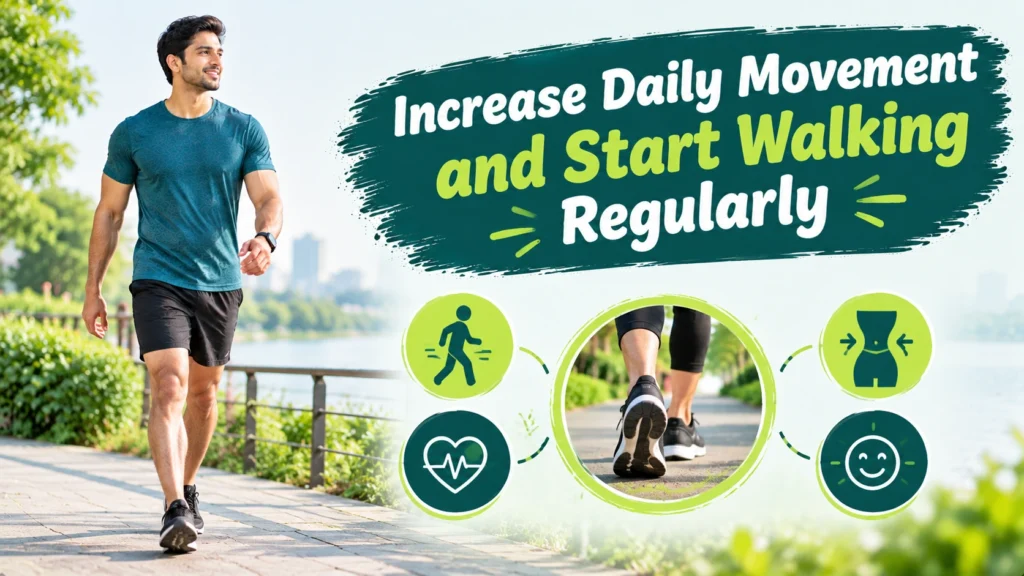
Nowadays, people take walking and incorporating cardiovascular activity into day-to-day life seriously. As you already know, sitting idle in an office chair or at home with little to no movement can lead to a bulging stomach pooch, which isn’t good for physical or mental health. If you can run or jog at atleast 2-3 times a week at a moderate pace, that will help your body burn calories. If you can’t do this, you can simply brisk walk daily for 10-20 minutes with a medium or higher pace and burn some extra calories for the day. You can also do jumping movements like jumping jacks and skipping rope, some of the best cardio exercises for burning body fat and boosting metabolism. If you walk daily with a properly balanced diet, your overall body fat will reduce significantly, which in turn reduces stomach pooch or belly fat.
Add Strength Training to Your Weekly Routine
Adding strength training to your routine is one of the best ways to feel fitter and more confident. For example, when you train your chest with a strength-training workout, it can help break down fat deposited in the upper, mid and lower chest. This gives you a more chiselled chest that feels fuller and more muscular. This way, you train every other body part: shoulders, arms, back, legs and abs. All these exercises use your core as you breathe in and out during the workouts. If you live in a small apartment, you can also do some workouts that help maintain your overall physical fitness and wellbeing. Hence, training your muscles 5-6 days a week can increase your basal metabolic rate, which burns calories even after you finish your workout, helping reduce belly fat.
Strengthen Your Core Without Expecting Spot Fat Reduction
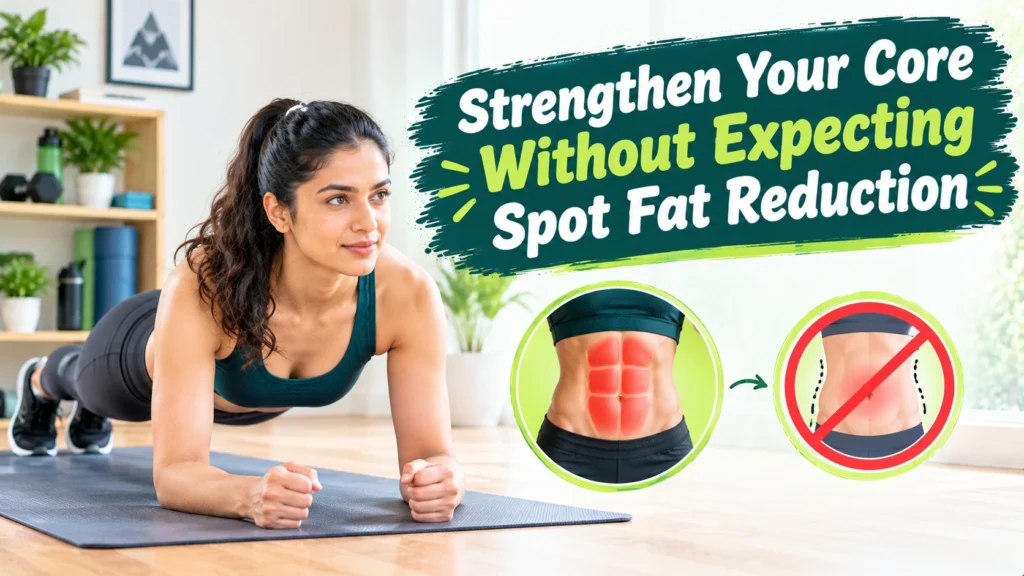
Few people realize that our core abdominal muscles are one of the body’s most important parts and require strength and function. People who have a weak core mostly either have postural problems or poor cardiovascular health because they do not train their core muscles. When you exercise to strengthen your core, like planks, crunches or Russian twists, your core muscles become stronger and more flexible, which can indirectly help burn calories and reduce visceral fat around your organs over time. Most people have misconceptions about reducing fat from a specific area of your body, which isn’t possible and isn’t supported by scientific theory. You can reduce fat from your entire body, not just one area. You can also add strength training and a balanced diet to reduce stomach pooch or belly fat.
Incorporate Cardiovascular Activities

When you do cardio, your body burns calories, which in turn burns fat. This stops fat from forming a stomach pooch. When you do activities like running, jogging, swimming or doing high-intensity interval training, your heart rate increases, which is the basic measurement for tracking your actual calories burned. So, a person or individual who doesn’t engage in any form of cardio will certainly get their love handles or stomach pooch problem. Moreover, many people add strength training with some form of cardio, like sprinting or brisk walking, after or before their workout. This eventually helps them to burn extra calories, which results in better cardio health and reduces belly fat. Furthermore, most often people track their progress by marking this issue with their increased weight and not with overall body composition and measurements.
Prioritize Sleep and Manage Stress

Many individuals who do prolonged night shifts or stay awake all night while watching their mobile screen experience sleep deprivation, which raises the issue of hormonal imbalances like leptin and ghrelin. Ghrelin is a hormone present in the stomach cells that tells the brain to fill the emptiness of your stomach, and leptin is also a hormone that sends signals to the brain when your stomach is fuller after eating. Furthermore, when you are stressed, your body sends signals of food cravings, which raise your body weight, in turn increasing your stomach pooch or belly fat. Hence, you must always have a proper sleep pattern with manage body stress levels.
Track Progress Consistently and Set Realistic Expectations
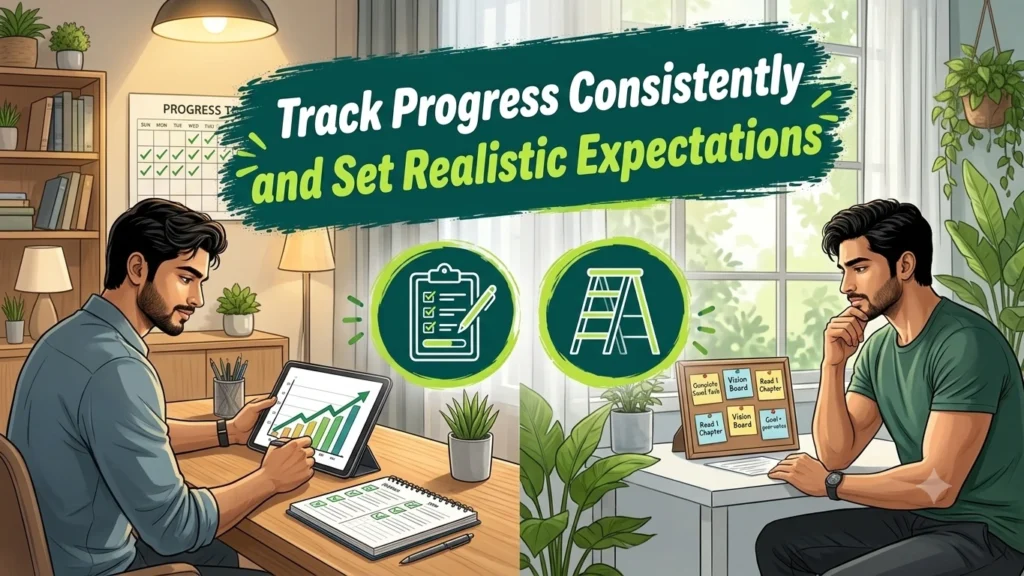
You need to track overall body composition and macro- and micronutrients that are needed for your body because if you are low in vitamins and minerals, after some time your body metabolism will go down, which will trigger the body fat percentage to go up, resulting in fat deposition around your stomach. Moreover, people just start doing a calorie deficit diet without knowing how much protein, fats, carbs and fibre are required by the body and randomly eat high-carb, high-sugar, bad-cholesterol foods, which are bad for the body’s digestion and lead to a bulging stomach pooch. However, there are a good number of apps for tracking your progress, and you can easily start your journey of shedding fat from your body. So, you must set realistic expectations in a more practical and logical way.
A Simple Weekly Plan for Beginners
Day | Activity | Duration or Focus |
Monday | Full-body strength training / Body weight training | 20–30 minutes |
Tuesday | Brisk walking | 20–30 minutes |
Wednesday | Strength training / Body weight training + core | 20–30 minutes; optional 5-minute core |
Thursday | Brisk walking | 20–30 minutes |
Friday | Full-body strength training / Body weight training | 20–30 minutes |
Saturday | Walking or light jogging | 20–30 minutes |
Sunday | Recovery | Rest or gentle stretching |
When Should You Seek Medical Advice About a Stomach Pooch?
If you see persistent or unexplained abdominal swelling around your stomach pooch, then you must go and visit a doctor. It may be possible that you have symptoms of a hernia or post-pregnancy abdominal muscle separation, which you mistook with fat. You must also check if there is any Severe or worsening pain, repeated vomiting, or other concerning symptoms that need prompt medical attention. You can do home remedies, but after a point, if there is no change in your fat-shredding schedule, then you must visit the doctor, who will help you diagnose the issue with the bulging stomach pooch.
Frequently Asked Questions
Is it normal to have a small stomach pooch?
Yes. A small lower-abdominal bulge can be completely normal due to natural body shape, fat distribution, posture, or abdominal anatomy.
Does lemon water reduce belly fat?
No. Lemon water does not directly burn belly fat. It can support hydration, but overall fat loss depends on sustainable eating habits and regular physical activity.
Can I reduce a stomach pooch without going to the gym?
Yes. Walking, bodyweight strength exercises, balanced meals, and consistent daily habits can support weight management without a gym membership.
Why does my stomach look bigger after eating?
Your abdomen may temporarily expand because of food, gas, or bloating. If the swelling persists or is painful, consult a healthcare professional.
Final Thoughts
Everyone should focus on sustainable Habits by eating a balanced diet, having a proper sleep cycle and incorporating strength or bodyweight training into their day-to-day life. Needless to say, focusing on having perfectly chiselled abs is an illogical path to follow.
Sources And References
https://www.health.com/bloating-vs-fat-11761852https://www.healthline.com/nutrition/20-tips-to-lose-belly-fat#tracking
https://www.manipalcigna.com/diet/belly-fat-loss-diet
https://www.linkedin.com/pulse/strength-training-belly-fat-loss-underrated-method-leadacademyuk-nuuec
https://www.ritfitsports.com/blogs/article/best-exercises-to-lose-belly-fat