
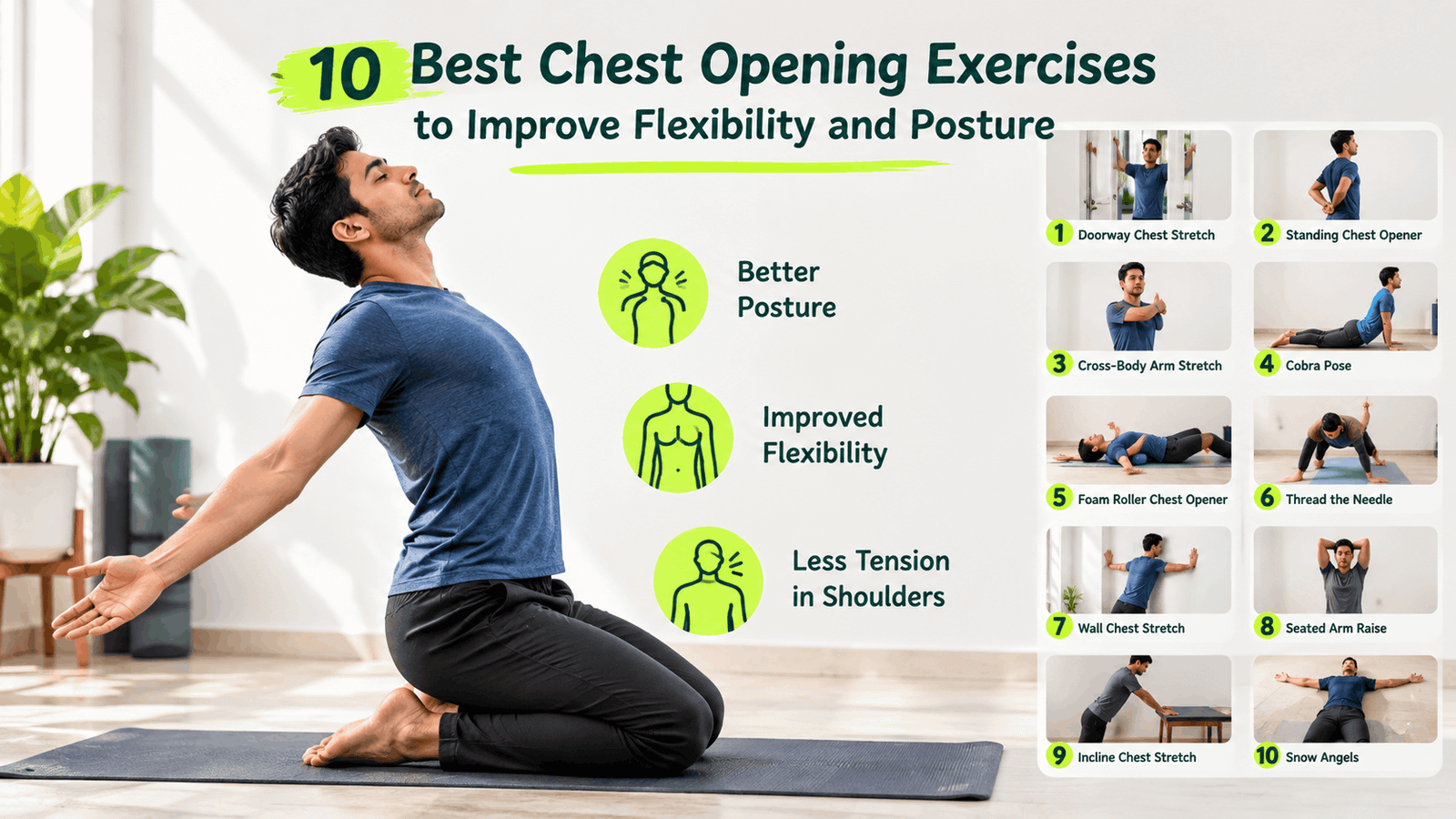
Most people who sit all day at their desk or at home using mobile phones for a long period of time may get stiffness or pain in their chest and shoulders. So, for this, I have got one of the easiest and coolest chest-opening exercises that you can do without any equipment. These exercises will help you build more flexibility and upper body mobility, regardless of your age or gender. And you won’t need fancy equipment or a larger space; you can easily perform these in your home.
What Are Chest Opening Exercises?

In simple layperson’s language, chest opening exercises are actions that involve stretching and mobility exercises that target your chest area and may involve your upper back and shoulders. So, these chest opening exercises help us relieve pain from our pectoralis major and pectoralis minor muscles. For better understanding, I will explain to you what the pectoralis muscles are in brief.
Pectoralis Muscle Group
In simple language, pectoralis muscles are present in the upper front part of the chest, which plays a major part in the movement of the front of the arm and shoulders. This muscle group is divided into two muscles, namely the pectoralis major and pectoralis minor muscles. The pectoralis major muscle is on the upper-front part of the chest, and underneath it we have the pectoralis minor muscle.
Why Does Your Chest Feel Tight After Sitting for Long Hours?

Sitting in a static, prolonged position at your office desk or at home is one of the reason that leads to feeling stiff around the chest and shoulder area. When we remain in a static position for a long duration, it causes reduced blood flow, and strain can increase on the spine, which can lead to pain in the chest. This also directly affects the posture of an individual; for example, sitting at a desk in a hunched position will eventually lead to forward head posture and rounded shoulders, which potentially cause chest pain. However, we can get relief through chest-opening exercises and mobility workout stretches.
What are the benefits of Chest Opening Exercises?
- Improved chest and shoulder flexibility: When you make a consistent effort to do chest opening exercises, it results in improved shoulder and chest flexibility.
- Better comfort during upper-body movements: Chest opening exercises reduce neck and shoulder pain, which helps build an upright stance of the spine, leading to better breathing capacity and neutral spine formation.
- Useful for people who work at a desk: For office-goers, these exercises play an important role because they most often get chest, neck and back pain problems. These chest-opening exercises help improve blood flow and posture mobility, which leads to working without getting overwhelmed by pain.
- An opportunity to interrupt long periods of sitting: When you have better upright posture and good breathing capacity, you can sit for a long duration at your office desk or at home without any inconvenience.
- Lower chances of injuries while working out: People who work out at the gym or at home usually have the problem of wrong posture when they perform a workout, which leads to major or minor injuries. For example, while performing a barbell bench press, not pushing your chest up and not making an arch with your back will eventually lead to poor posture and arm injury. So these chest-opening exercises prevent these injuries from happening.
- A useful addition to a warm-up or general mobility routine: Before doing an upper-body workout, your trainer always asks you to do a proper warm-up before starting your upper-body workout. So, this mobility routine helps warm up the body before engaging in any intense workout.
- Increases breathing capacity: When you sit with hunched shoulders, your diaphragm gets shrunk, which leads to wrong or improper breathing. This exercise helps individuals breathe properly while maintaining correct upright posture.
10 Best Chest Opening Exercises to Try at Home

1. Doorway Chest Stretch
Purpose: One of the best exercises for stretching the chest muscles, improving chest flexibility, and improving shoulder mobility.
How to perform:
Stand with your forearms raised to 90 degrees at shoulder level. Now keep both elbows against your doorway. Now gently move one leg forward and then push your upper body forward without leaning back, in a straight stance. You can feel the stretch in your chest while doing this exercise.
Breathing pattern: Keep breathing at a normal pace and never hold your breath during the exercise.
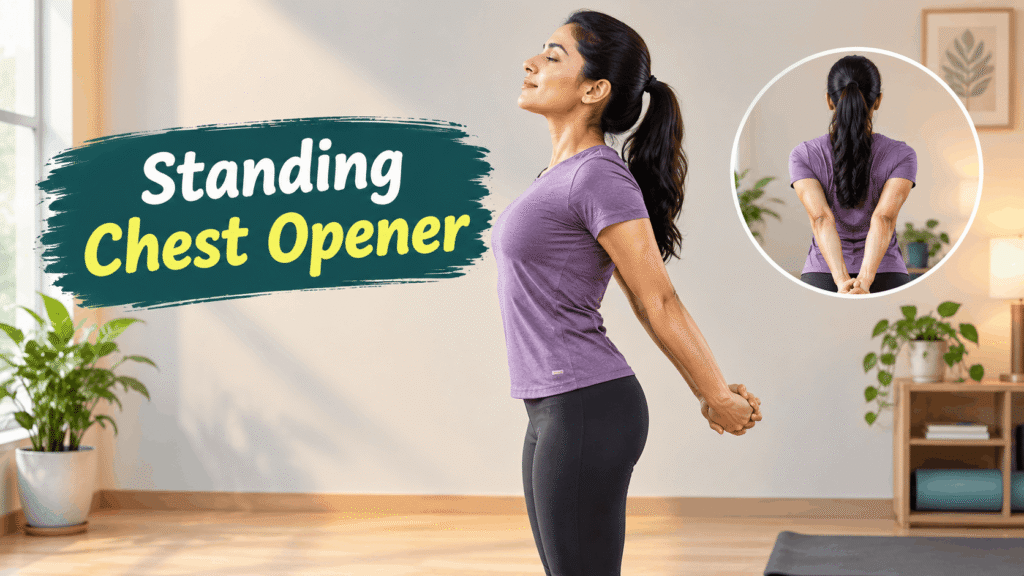
2. Standing Chest Opener With Hands Clasped Behind the Back
Purpose: The best easy-going exercise you can do at home or at your office in 2-3 minutes. This exercise opens your chest, shoulders and arms, improving overall mobility and postural deformity.
How to perform:
Stand with your hands clasped at the back and shoulders rolled back. Then gently push your hands back till you feel a stretch in your shoulders and chest. Do this for 15-30 seconds in a set. And you can do 2-3 sets overall. You can use a towel if you have limited shoulder mobility and hold it between your hands for better movement.
Breathing pattern: Inhale while clasping your hands, then keep breathing during the whole stretch, and then release while releasing from the stretch. Note: Do not hold your breath during the exercise.
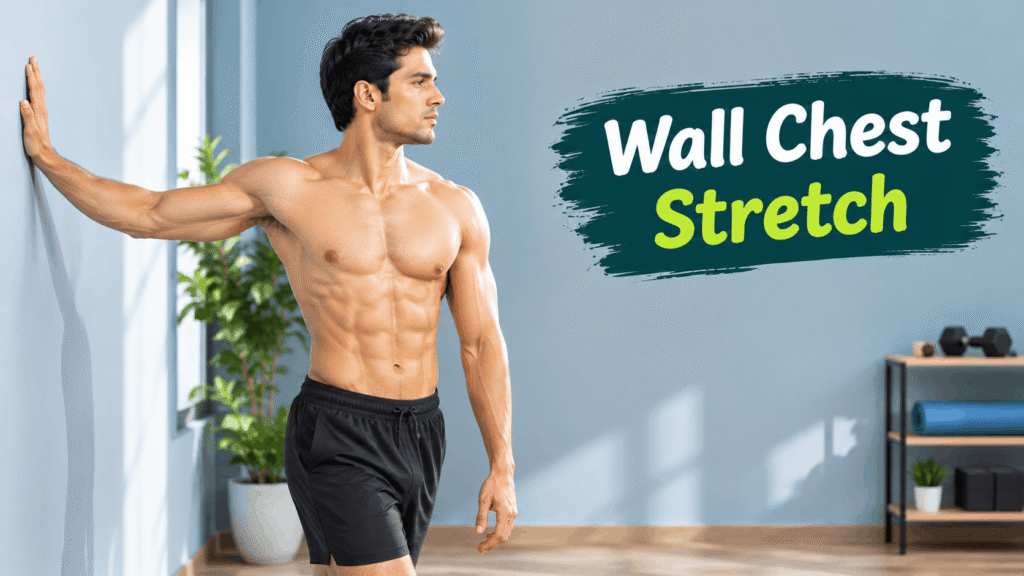
3. Wall Chest Stretch
Purpose: It increases flexibility around the shoulders and chest. Loosens tight muscles around the chest, shoulders and arms.
How to perform:
Stand in front of a wall and place one arm straight with your palm touching the wall at the same height as your shoulders. Now, gently push through your arm to stretch your chest. Do this for 20-30 seconds and repeat with the other hand as well. You can perform 1-2 sets of this chest opening exercise. Avoid rotating the stretch to your chest, as it can result in shoulder pain.
Breathing pattern: Keep breathing normally during the whole stretch, and do not hold your breath.
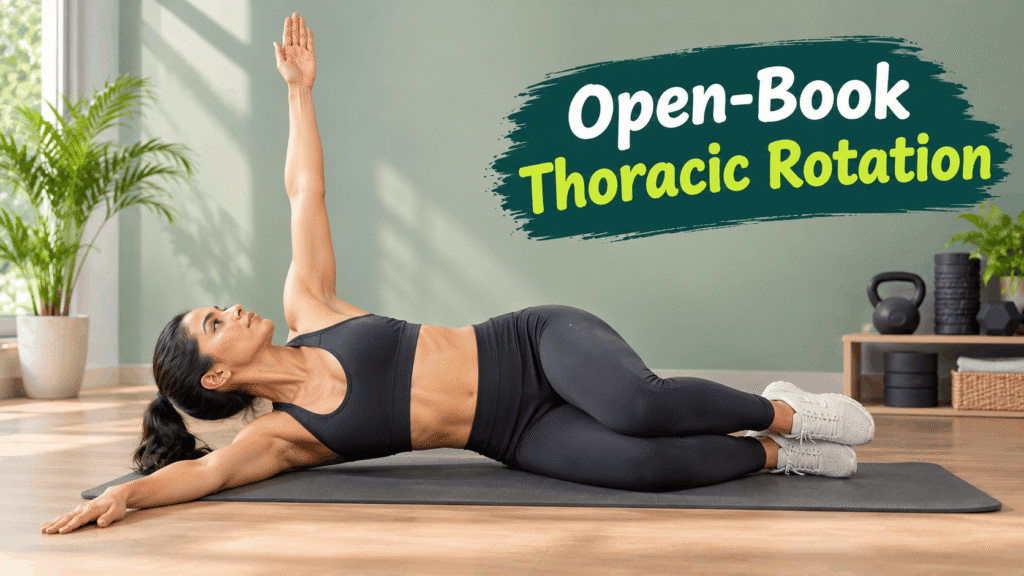
4. Open-Book Thoracic Rotation
Purpose:
It improves thoracic spine rotation (the region of the body located between the neck and the abdomen), upper-back flexibility, and opens the chest. It primarily targets upper-back rotation.
How to perform:
Lie on one side with your hips and knees bent at a 90-degree angle; now place your knees together for stability. You can use a pillow for neck Support to maintain better balance with the ground. Extend both arms sideways and palms facing the sky, with the bottom arm resting on the floor. Hold the stretch for 10–20 seconds, then slowly come back to the neutral position. Repeat this exercise 6–8 times on each side.
Breathing pattern: When stretching your one arm sideways, take a natural inhale. Release your breath after coming back to the initial stage.
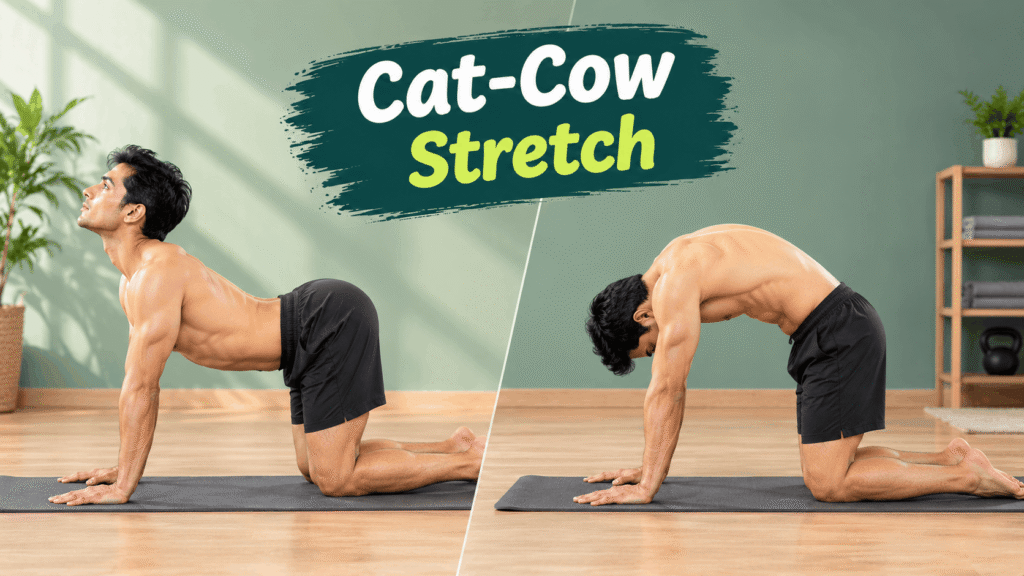
5. Cat-Cow Stretch
Purpose:
Those who spend a lot of time sitting at an office desk will get help relieving their back pain through the cat-cow stretching exercise, which can also help with chest pain. Our entire back is primarily stretched during this exercise, which eventually relaxes your chest and upper back muscles.
How to perform:
Sit down in a cat pose, hunching your back out and moving your head down like a cat with breathing normally. Then release your breath while arching your back and moving your chest in an upward direction. And repeat this 5-10 times with natural, rhythmic breathing.
Breathing pattern: Inhale when coming into cow pose and breathe out when getting into cat pose. Do not hold your breath during this exercise.

6. Sphinx Pose
Purpose:
It improves thoracic spine and chest flexibility. When you press your arms into the ground while pushing forward the chest and shoulders, you get a gentle backbend. It helps with hunched shoulders and stress reduction.
How to perform:
Lie down, place your forearms down and try to keep your elbows firm. Press into the palms. Focus on moving your shoulders back and expanding the chest, and keep the hips firm while looking forward.
Breathing pattern: Inhale while coming upward and exhale while going down to the ground.

7. Low Cobra Pose
Purpose:
Low cobra pose works on upper back pain and reduces stress due to shallow breathing. This stretching exercise helps you get relief from a tight chest and overstretched upper back muscles.
How to perform:
Keep your hands next to your ribs, with your elbows back and next to your body. Press the lower body into the floor without using your hands. Now keep the shoulders down, away from the ears. Do this pose for 15-30 seconds at each interval.
Breathing pattern: Breathe in while reaching up and breathe out while coming down to the ground.
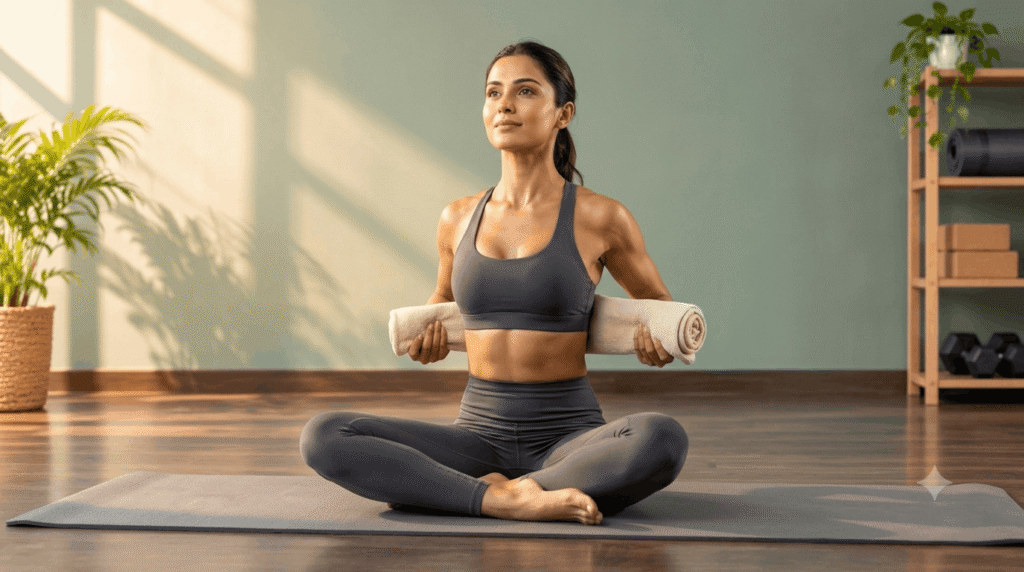
8. Towel-Assisted Chest Opener
Purpose:
This chest opening exercise is best for a stiff chest and shoulders. It relieves the pain in the upper back and neck caused by an individual’s hunched posture.
How to perform:
Stand up and hold the towel behind your back with both hands. Now push your shoulders back and lift your chin and look up. Hold for 10-20 seconds and repeat 5-10 times. Do this every day to stand tall.
Breathing pattern:
Keep long, deep breaths during the whole exercise and start stretching gently while holding the towel at your back, allowing the chest muscles to stretch with ease.

9. Foam-Roller Chest Opener
Purpose: This exercise helps in getting relief from chest soreness and improves flexibility around the pectoral muscles.
How to perform:
Lie on the ground with the foam roller placed behind your back. Tuck your shoulder blades down and put your back flat on the foam roller. Palms go up facing the ceiling. Stretch as much as you can while placing your forearm on the ground. Then move your palms in the upper direction of your shoulder and feel the stretch. Now hold here for 20 seconds and then release. You can repeat this exercise 2-5 times in a row.
Breathing pattern: You must breathe in a diaphragmatic breathing pattern while doing this exercise. Inhale as you move your palms upward and exhale when you come back to the initial stage.
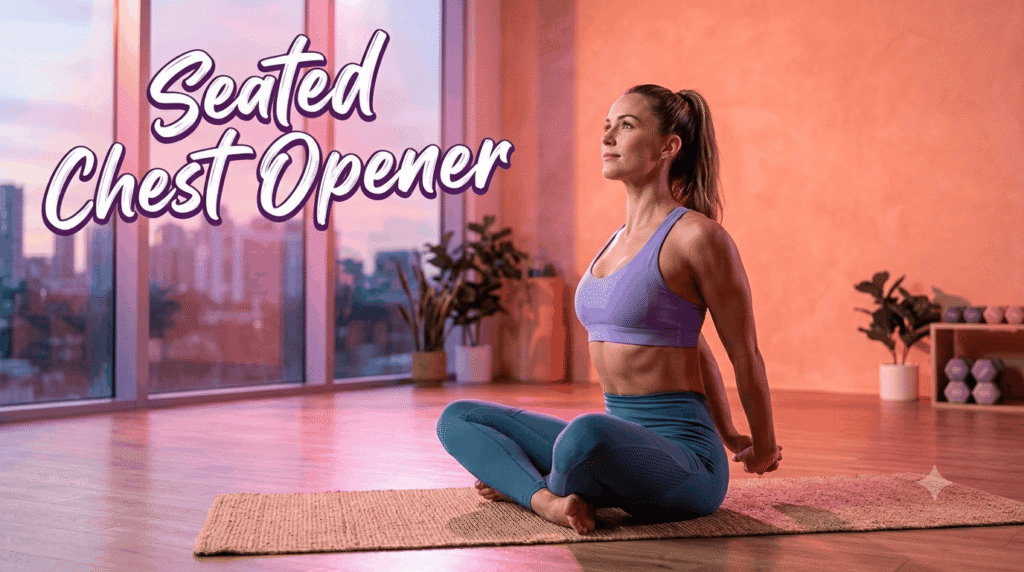
10. Seated Chest Opener
Purpose:
For posture correction, this is one of the best chest-opening exercises. It is commonly used as an upper body warm-up as well.
How to perform:
Scoot to the edge of the chair; your hips are on the edge. Sit in a straight position and clasp your hands behind you. Lift your chin to your chest. Extend your arms; kick into the chest, shoulders and biceps. Hold this position for 20-30 seconds and breathe, then release to come back to the neutral position.
Breathing pattern: Breathe in while you stretch your arms out to the sides, and then breathe out when you release the tension.
Common Mistakes to Avoid When Doing Chest Opening Exercises
- One of the common mistake every beginner make is forcing the arms too far behind the body.
- You don’t need to arch excessively through the lower back to imitate an open chest.
- When shrugging the shoulders towards the ears, it restricts the full upper body movement or rotation.
- Holding your breath during a stretch when it is not needed.
- Bouncing aggressively at the end of a stretch.
- Ignoring discomfort or continuing through sharp pain may cause a serious injury.
- Don’t expect that stretching alone can change posture permanently. Yes, it is one of the factors, but your lifestyle, diet and body composition all play an important role.
- Avoid doing advanced backbends before getting comfortable with basic stretching exercises.
Safety Tips Before You Start Chest Opening Exercises
- If you are a beginner, start with a comfortable number of repetitions and increase it gradually.
- For stretching on the ground, make sure you have a clear enough floor space.
- Avoid pushing aggressively while doing stretching exercises.
- Modify movements if any pose or position is becoming difficult for you to execute. Try kneeling, lying down, or reaching behind your back.
- If you have any recent injury or surgery, seek advice from a qualified physiotherapist or healthcare professional.
- Do not treat exercise as a remedy for unexplained chest symptoms.
Frequently Asked Questions
Can Chest Opening Exercises Help With Neck and Upper Back Stiffness?
Chest opening exercises can help ease stiffness that happens when you sit for a while. Movements like the open-book thoracic rotation can improve movement in the back. Neck and upper-back stiffness can come from many different reasons, so chest stretches might not fix every problem that is causing the stiffness.
Should I Warm Up Before Doing Chest Opening Exercises?
Gentle chest stretches usually don't need a warm-up. But a few minutes of walking, rolling your shoulders or moving your arms gently can make you feel better before you start stretching. Don't push your shoulders into a stretch if your body feels tight.
Can Chest Opening Exercises Improve Breathing?
Chest opening exercises can help some people feel more comfortable moving their chest and back while breathing. Yet chest opening exercises do not necessarily raise lung capacity or cure breathing disorders. If you experience shortness of breath, please seek medical advice instead of relying on chest opening exercises.
Why Do I Feel a Stretch in My Shoulder Instead of My Chest?
You might notice the stretch in the shoulder when the arm is positioned that way, when the shoulder moves freely or when the exercise feels very intense. Try easing the stretch in the shoulder by lowering the arms or using a variation. You should not push through pain, pinching or persistent discomfort in the shoulder.
Can I Do Chest Opening Exercises After a Chest Workout?
Yes, gentle chest‑opening movements can be added after a chest workout if you feel comfortable. Keep the stretches controlled. Do not force a deep stretch on tired muscles. If your chest or shoulders are very sore, reduce the intensity. Wait until the discomfort lessens.
How Long Does It Take to Notice Results From Chest Opening Exercises?
The time it takes to notice changes depends on your starting mobility, how consistent you are with your daily activities, and your personal needs. You might feel less stiff after a session, but real improvements in flexibility usually take several weeks of regular practice. It's better to focus on moving and making slow progress instead of expecting your posture to change right away.
My Final Thoughts
I hope after going through this whole blog, everyone can easily start doing chest-opening exercises, as they’re very good for mobility and loosening up tightness around the neck, chest, arms and shoulders. I will be grateful if this article really makes a change in anyone’s life. Thanks from the bottom of my heart.
Sources & References
https://theworkoutmag.com/training/pectoral-muscle-anatomy-chest-exercises-guide
https://www.britannica.com/science/pectoralis-muscle
https://www.chiropractorcollegepark.com/can-bad-posture-cause-chest-pain/